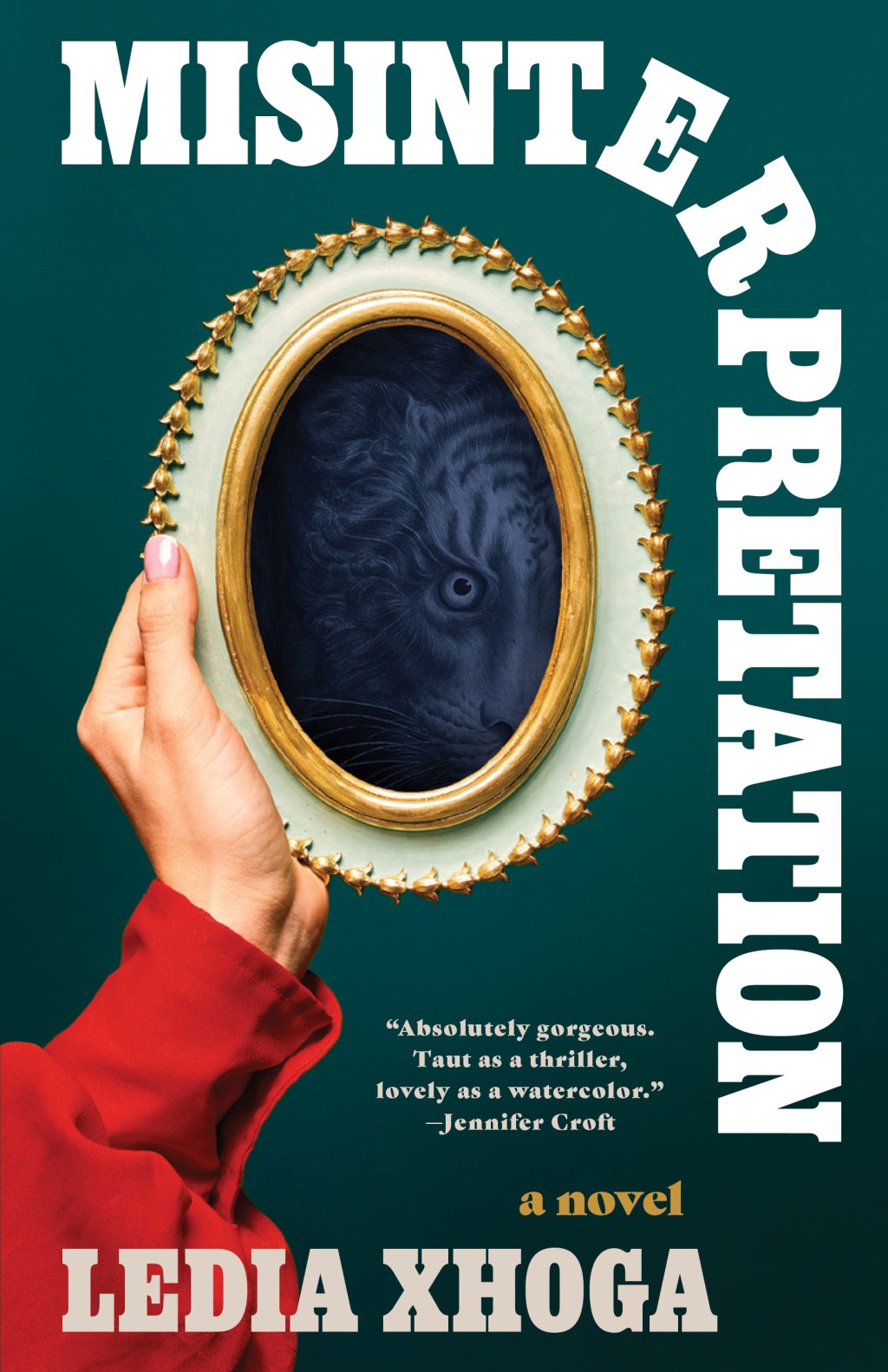
Ledia Xhoga’s debut novel Misinterpretation is a masterclass in narratorial unreliability. How can you trust a narrator who can’t trust herself? The novel’s title reminds us of the many possible points of failure in narrative, as the narrator serves the reader as a translator not only of other languages but also of the people and events around her.

This ruminative novel is told in a matter-of-fact voice, but it quickly evolves into a thriller that is infinitely complicated by our inability to trust the narrator’s own perceptions or the motivations she attributes to others.
Misinterpretation follows an unnamed Albanian woman who works as a translator and interpreter in New York City. When she begins interpreting for Alfred, a Kosovar torture survivor with a funny smile, her marriage and her sense of belonging begin to unravel.
Our interpreter meets Alfred when she is contracted to interpret for him at a dentist appointment. While the narrator takes a moment to feel comfortable with him even on a professional level–though they share a native language, they speak different dialects–Alfred claims an instant feeling of connection and trust and asks her to interpret for him at his therapy appointments. The first and only of these appointments that our narrator attends collapses the already-weak walls that separate self and other.
What our narrator believes to be helpful action motivated by empathy looks strikingly similar to reckless behavior driven by projection. There are two things we can trust about the interpreter: she means well, and she will mess things up. By going beyond her professional role to help the people she feels connected to by her status as an upwardly mobile immigrant, the interpreter alienates her husband, damages Alfred’s marriage, and endangers a young Kurdish poet.
In the second half of the novel, the interpreter returns home to Albania–a brief huddle below deck before she attempts to right the ship.
Further Reading
For anyone still grappling with the ideas in Misinterpretation, or for anyone who wants a bit of an ethics primer before diving in, I recommend Leslie Jamison’s essay “The Empathy Exams.”
 MAD Reviews
Leave a comment